

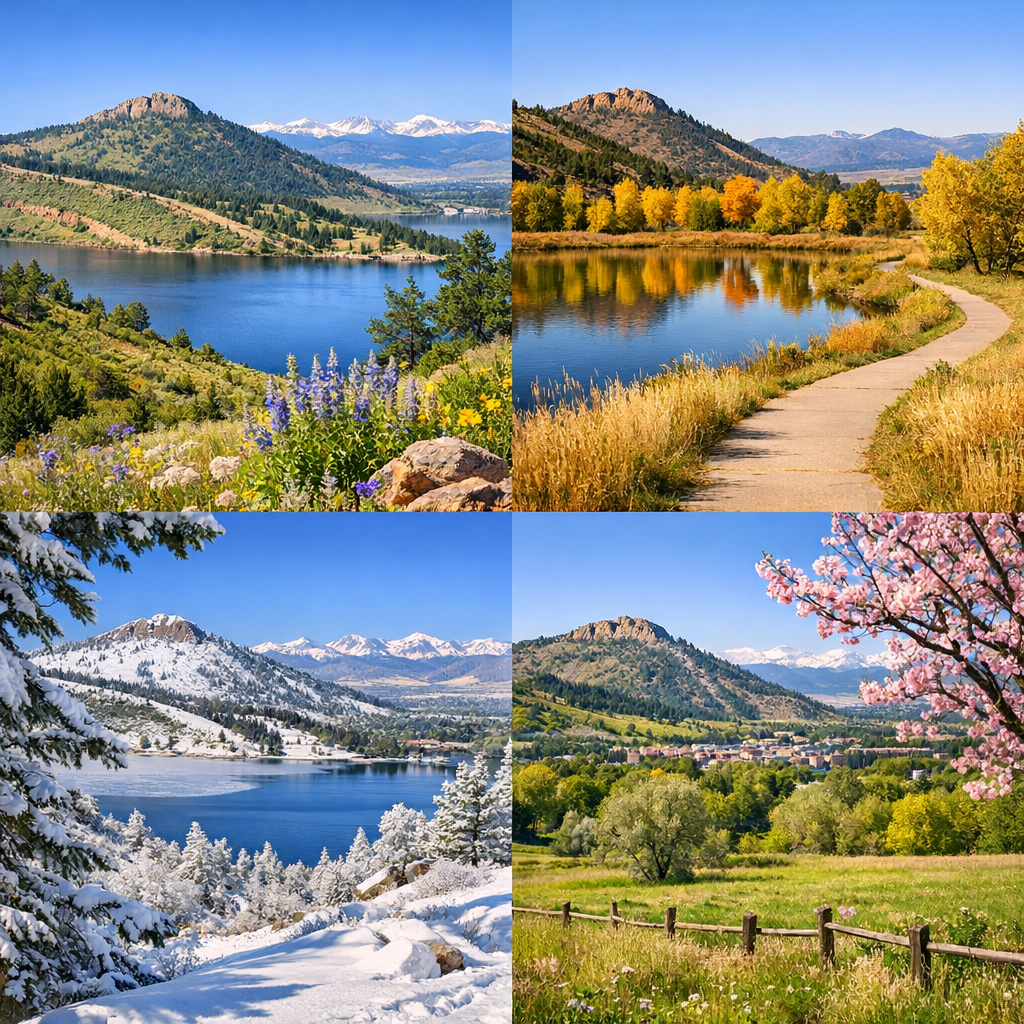
Fort Collins, Colorado, offers a diverse climate that showcases the beauty of all four seasons. Understanding these patterns can help residents and visitors make the most of what each time of year has to offer.
Winter: Crisp and Snowy
From December through February, Fort Collins experiences cold temperatures, with average lows around 18°F and highs near 43°F. Snowfall is common, averaging about 51 inches annually, primarily from December to April. Despite the chill, the city enjoys abundant sunshine, which often leads to quick snowmelt and clear roads.
Spring: A Gradual Warm-Up
March to May brings a gradual increase in temperatures, with highs ranging from 50°F in March to 69°F in May. This period also sees the highest rainfall, particularly in May, which averages 2.94 inches. The combination of warming temperatures and increased precipitation contributes to the blooming of local flora and the greening of the landscape.
Summer: Warm and Sunny
June through August are characterized by warm temperatures and clear skies. July, the warmest month, boasts average highs of 87°F. Rainfall during this season is relatively low, with July averaging 1.71 inches. The low humidity and abundant sunshine make for pleasant outdoor activities.
Autumn: Cool and Colorful
September to November sees a gradual cooling, with highs dropping from 77°F in September to 51°F in November. Precipitation decreases during this period, and the changing foliage offers picturesque views, especially in the surrounding foothills.
Environmental Considerations
Fort Collins’ climate is classified as cold semi-arid (Köppen BSk), characterized by low annual precipitation averaging 15.8 inches. The city is situated in USDA Plant Hardiness Zone 5b, indicating that the average annual minimum temperature ranges from -15°F to -10°F. This classification influences local agriculture and gardening practices.
Understanding these seasonal patterns and environmental factors can help residents and visitors alike appreciate the unique climate of Fort Collins and plan accordingly for each season’s offerings.